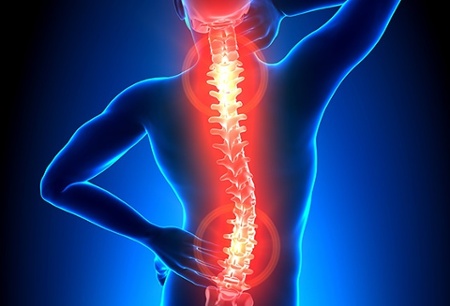
The Anatomy of the Back
The back is made up of several different structures that work together to support your body. An issue with one or more of these structures can cause back pain.
Some of the regions of the back and spine include:
- Vertebrae: Small bones stacked on top of one another that protect the spinal cord.
- Intervertebral Discs: Cushion-like pads that are located between the vertebrae and act like shock absorbers for the spinal joints.
- Spinal Cord: A bundle of nerves that runs through the vertebrae down the length of the back (spinal column).
- Ligaments: Bands of flexible and tough tissue that hold the vertebrae in place.
- Tendons: Cords of tissue that connect muscles to bones.
- Muscles: Dynamic fibers that support your spine and help you move.
Types of Back Pain
Doctors usually describe the different types of back pain based on severity and duration in the following ways:
- Acute Back Pain: Happens suddenly and lasts from a few days to a few weeks.
- Subacute Back Pain: Can start suddenly or over time and last from 4 to 12 weeks.
- Chronic Back Pain: May start quickly or over time and lasts longer than 12 weeks.
What Are the Main Causes of Back Pain?
There are many different causes of back pain, but some of the most common include:
- Strained muscles: Muscles, tendons, or ligaments can be strained from lifting something heavy or improperly.
- Diseases: Back pain can be a symptom of diseases such as arthritis, connective tissue disease, osteoporosis, scoliosis, and other musculoskeletal and skin disorders.
- Injuries: Injuries to the back can occur from falls, car accidents, or sports injuries.
- Bad posture: Poor posture can put a strain on the back and lead to pain.
When Should I See a Doctor for My Back Pain?
It’s essential to see your doctor if you experience back pain that is severe, persistent, or gets worse over time. Back pain can be a symptom of a serious underlying condition, so it’s important to get an accurate diagnosis.
If you are experiencing any other symptoms along with your back pain, such as numbness, tingling, or leg pain, it is important to seek medical attention right away. Not seeking medical attention may make the pain worse and prevent you from getting the treatment you need.
You should see your doctor for back pain:
- If the pain is severe or persists for more than a week
- If you are also experiencing numbness, tingling, or weakness in your legs
- If over-the-counter medication and home treatment are not providing relief
- If you have a history of back problems or spinal surgery
- If you are pregnant
- If you have incontinence
How is Back Pain Diagnosed?
There are several ways that doctors can diagnose back pain. First, they will ask about your medical history and symptoms. They will also perform a physical examination to check for signs of muscle spasms, tenderness, and weakness.
They may also order imaging tests, such as X-rays, MRIs, or CT scans, to get a more detailed look at the structures in your back. Once they have all of this information, they will be able to make a diagnosis and develop a treatment plan.
What Are the Treatments for Back Pain?
There are a number of different treatment plans for back pain that depend on the cause and severity of the pain. For example, if a muscle strain is causing the pain, over-the-counter pain medication and ice may be sufficient. However, more aggressive treatment may be necessary if the pain is due to another serious condition.
If there is severe pain, your doctor may prescribe a stronger medication, recommend physical therapy, or even suggest surgery. In some cases, injections or nerve blocks can be used to help relieve pain.
For chronic low back pain or severe back pain, your doctor may recommend a combination of treatments, including medication, physical therapy, exercise, and lifestyle changes. They may also refer you to a pain specialist.
Ultimately, the best treatment plan for back pain will be determined by a healthcare professional after conducting a thorough evaluation.
Schedule an Appointment for Back Pain Relief in New York
If you’re experiencing back pain, don’t wait to seek treatment. Back pain can often be managed effectively with the right care, whether through physical therapy, pain relievers, muscle relaxants, or other treatment options tailored to your needs.
At NY Neurology Associates, we’re here to help you find the right back pain relief and get you back to doing what you love. Call us today to schedule your consultation and take the first step toward a healthier spine.