Knee Anatomy
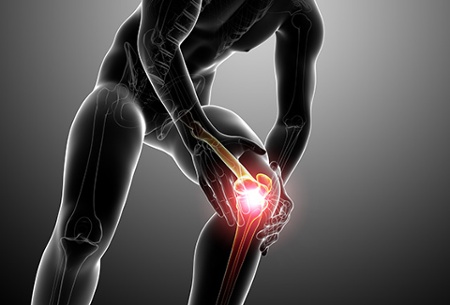
Our knees are the largest joints in our body and consist of four main factors:
- Bones
- Ligaments
- Cartilage (articular and meniscus)
- Tendons
The knee joint is formed where your three bones meet. These bones are your:
- Thighbone (femur)
- Shinbone (tibia)
- Kneecap (patella)
Your ligaments connect and hold your bones together so that your knee is kept in place. Your tendons connect your muscles to the bones.
Your articular cartilage makes it easier for your bones to glide smoothly across each other every time you bend or straighten your leg. Your meniscal cartilage protects your bones by acting as a shock absorber between your thighbone and shinbone. If there is an issue with any of these four parts, you may begin to experience chronic pain in your knees.
What Causes Knee Pain?
Knee pain can typically be caused by one of the following three situations:
- Wear and tear
- Illness
- Injury
Several factors can increase your risk of experiencing issues with your knee, including:
- Having excess weight — Excess weight puts added stress on your knee joints.
- Little to no muscle strength — If your muscles are weak, they will not be able to stabilize and protect your joints as much as they should.
- Certain professions and sports — There are certain professions and sports that put repeated and increased stress on your knees than others, and this can increase your risk for a knee injury.
- Prior injury
What Are Some of the Most Common Knee Problems?
Some of the most common knee problems can be found below, and they include:
- Knee osteoarthritis — As you age, the cartilage in your knee, as well as other parts of your body, begins to break down. Once the knee cartilage is completely gone, your bones start to rub against each other. This bone-on-bone rubbing can be quite painful.
- Rheumatoid arthritis — Rheumatoid arthritis is a form of knee arthritis that causes your joints to become inflamed and can destroy the cartilage in your knee.
- Bursitis — This occurs when the liquid-filled sacs surrounding your knee become inflamed or irritated.
- Gout — Gout can cause discomfort in your knee when there is too much uric acid build-up in your body.
- Patellofemoral pain syndrome — This typically affects children, young adults, and athletes. However, it can affect older adults if they have developed arthritis in their knees. This condition usually causes pain behind or around the kneecap.
Common knee injuries include:
- Meniscus tear — Your meniscus helps cushion and stabilize your knee joint. You can tear your meniscus if your knee is twisted during an injury or while exercising.
- Anterior cruciate ligament (ACL) injuries — Athletes who participate in sports that require sudden changes in direction are at a higher risk for these injuries.
Symptoms of Knee Pain
Common symptoms that can be associated with knee pain include:
- Swelling
- Stiffness
- Lacking the ability to fully straighten your knee
- Weakness and/or instability
Depending on the location and severity of your discomfort, your symptoms may vary.
How Are Knee Problems Diagnosed?
To diagnose your knee problems accurately, a specialist will review your medical history and conduct a physical exam. During your physical exam, a series of tests may be done to identify the root cause of your discomfort. Diagnostic images such as X-rays, CT Scans, or ultrasounds may also be taken.
Treatment Options for Knee Pain
Knee pain can be treated in a variety of forms across several medical disciplines. These treatment options include:
- Medication to relieve pain
- Localized injections
- Nerve blocks
- Holistic treatment options such as acupuncture
- Massage therapy
- Joint fluid therapy in which hyaluronic acid injections (Supartz, Orthovisc, Synvisc, Euflexxa) can be used
Can Discomfort in My Knee Be Prevented?
While it is not always possible to prevent knee pain, there are a few steps that you can implement to minimize joint deterioration and injury. These steps include:
- Maintaining a healthy weight
- Conditioning your body before participating in sports
- Maintaining good technique and form when participating in sports or activities that require specific movement patterns
- Strengthening your muscles
- Stretching regularly
- Modifying your exercise routine (If you have arthritis pain or recurring injuries, low-impact exercises and/or aerobics can be very beneficial because less stress will be put on your knee.)
Comprehensive Knee Pain Relief at NY Neurology Associates
Don’t let knee pain keep you from doing the things you love. Whether your discomfort is caused by a meniscus tear, runner’s knee, arthritis, or another knee injury, our expert team in NYC can help you find lasting relief. We use advanced diagnostics, physical exams, and tailored treatment plans to address both acute injuries and chronic pain.
Contact NY Neurology Associates today to schedule your appointment and start your path toward stronger, healthier knees.
FAQs About Knee Pain Treatment